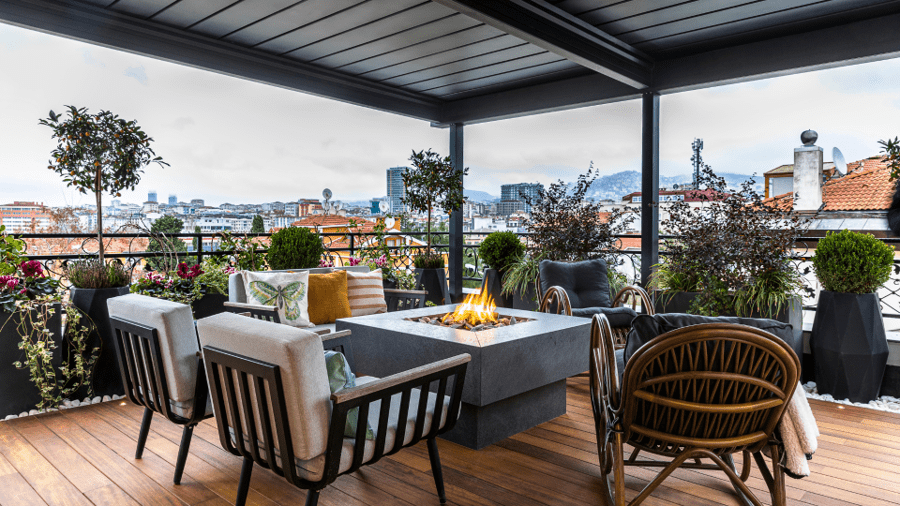
You’ve been there before. You settle in somewhere a restaurant terrace, a friend’s patio, a cozy corner of a well-landscaped garden, and before you know it, hours have gone by. The conversation drags on, no one wants to get up, and when you check the time, you’re surprised by how much time has passed. Conversely, you’ve also had the opposite experience: An outdoor space that, despite beautiful furniture and tasteful decor, never creates that sense of belonging. You settle in, check your phone, and after twenty minutes, you head back inside without really knowing why. This phenomenon isn’t a coincidence. It’s the result of well-documented psychological principles that explain how our brains react to their surroundings, and how certain spaces, consciously or unconsciously, are designed to keep us there.
Environmental psychology: a science that explains our spatial preferences
Environmental psychology is a discipline that studies the relationship between human beings and their physical environment. It seeks to understand why certain spaces promote well-being, creativity, or relaxation, while others cause anxiety, discomfort, or indifference. Its findings, developed since the 1970s by researchers such as Roger Ulrich and Rachel and Stephen Kaplan, have profoundly influenced architecture, interior design, and, more recently, residential exterior design.
One of the most influential theories in this field is the “prospect and refuge” theory, roughly translated as the theory of view and shelter. It posits that humans instinctively feel comfortable in spaces that offer two things simultaneously: An unobstructed view of their surroundings (the “prospect”, the ability to see without being taken by surprise) and a sense of protection from behind and above (the “refuge”, physical and psychological safety). This is a legacy of our evolution: Our ancestors preferred elevated positions with an unobstructed view and cover overhead a tree, a rock face, that allowed them to monitor threats while remaining protected.
The Five Elements That Make an Outdoor Space Captivating
By applying these principles to the design of residential outdoor spaces, we can identify five key elements that explain why some patios and decks create that irresistible sense of belonging, and why others fail to do so.
The first element is boundaries. Our brains feel more comfortable in a space with defined boundaries, not closed walls, but a visual boundary that signals, “This is our space.” That’s why we feel more comfortable in a corner of a restaurant than in the center of the room, and that’s why a patio with an overhead structure and side boundaries creates a greater sense of well-being than an open space of the same size.
The second element is overhead protection. Having something above you, even if it’s partial or openwork, instinctively triggers a sense of security. This is the “refuge” principle in prospect-refuge theory: you feel protected, less exposed, and more inclined to relax and stay. A completely open sky, however beautiful it may be, subtly induces a mild sense of vigilance that prevents complete relaxation. An overhead structure, even if it’s transparent or adjustable.
The third element is light control. Our mood and energy levels are deeply influenced by the quality of the light around us. Direct, intense light stimulates and alerts us, which is perfect for certain activities, but counterproductive for relaxation. Soft, filtered, and adjustable light, on the other hand, creates an environment conducive to relaxation, conversation, and well-being. Outdoor spaces that allow you to control the amount and quality of light naturally create a more welcoming atmosphere that makes you want to stay.
The fourth element is thermal comfort. Temperature is one of the most direct factors influencing our desire to stay or leave. If it’s too hot, we leave. If it’s too cold, we leave. The thermal comfort zone, roughly between 18 and 24 degrees, is the range in which we can stay for long periods without even thinking about it. An outdoor space that maintains this comfort zone by adjusting shade, providing shelter from the wind, or adding a heat source creates the optimal conditions for staying there.
The fifth element is a connection to nature. Research in environmental psychology consistently shows that the presence of natural elements, natural light, fresh air, the sounds of nature, and visible vegetation, reduces stress, improves mood, and fosters creativity. An outdoor space that maintains this connection to nature while offering protection and comfort creates the best of both worlds, neither completely indoors nor completely outdoors, but in that in-between space that combines the benefits of both without their drawbacks.
Why Most Patios Fail to Create That Feeling
If these principles are relatively simple to understand, why do so many patios and terraces fail to put them into practice? The answer often lies in a misplaced priority: people invest in appearance, furniture, plants, lighting, before investing in the structure that creates the psychological conditions for well-being. A beautiful set of patio furniture placed in the middle of an open patio with no overhead structure remains an uncomfortable space, no matter how high-quality the materials are. Psychology isn’t fooled by aesthetics; it responds to structure.
A space without boundaries exposes us to prying eyes, which triggers a slight sense of social vigilance that is incompatible with deep relaxation. A space without overhead protection leaves us at the mercy of the sun, rain, and temperature, which creates a dependence on weather conditions and drastically reduces the opportunities to use it. A space without light control subjects us to the whims of the sun rather than letting us choose, which limits our ability to create the atmosphere we desire.
Vivace: A retractable pergola that embodies all these principles
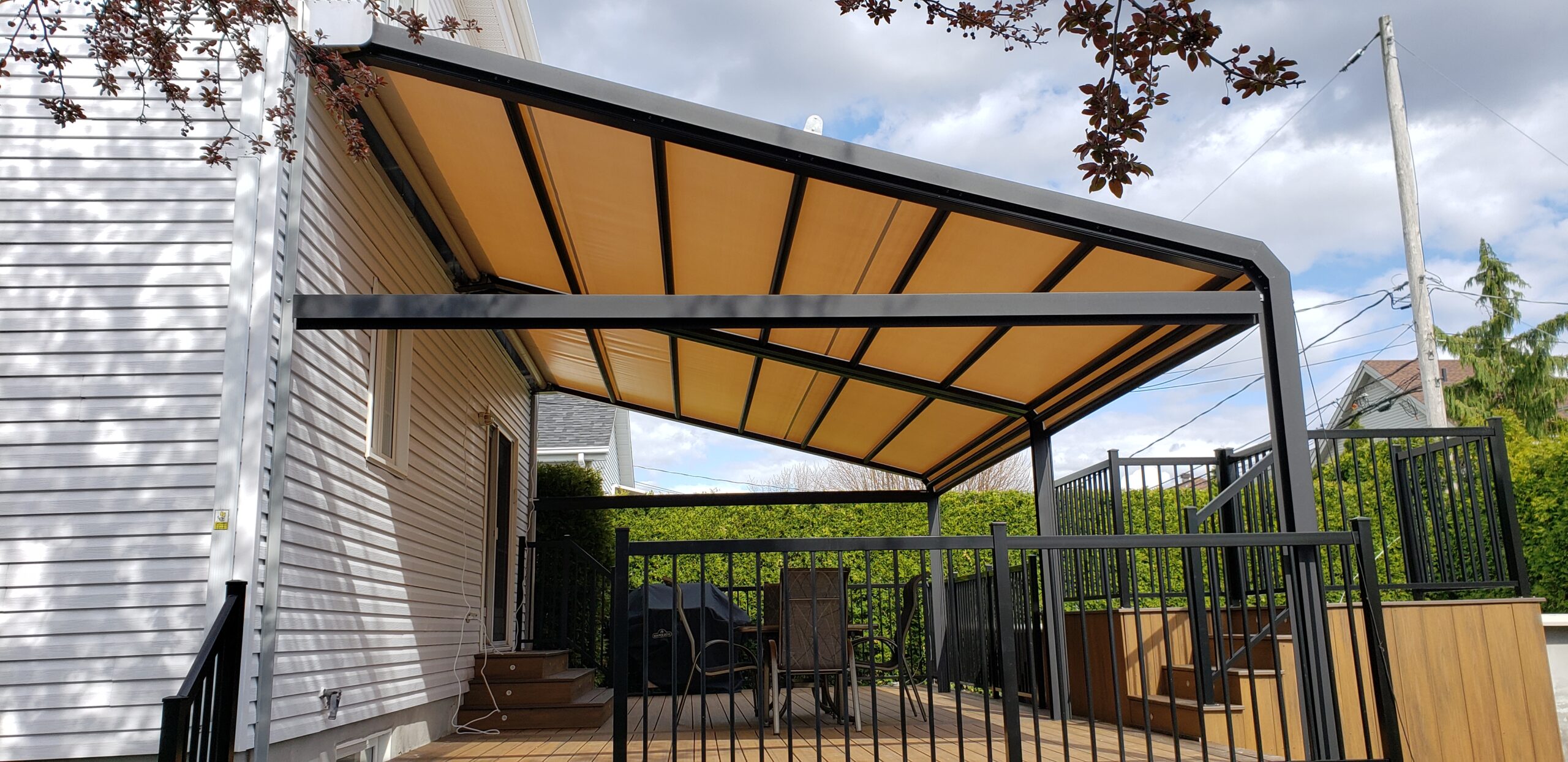
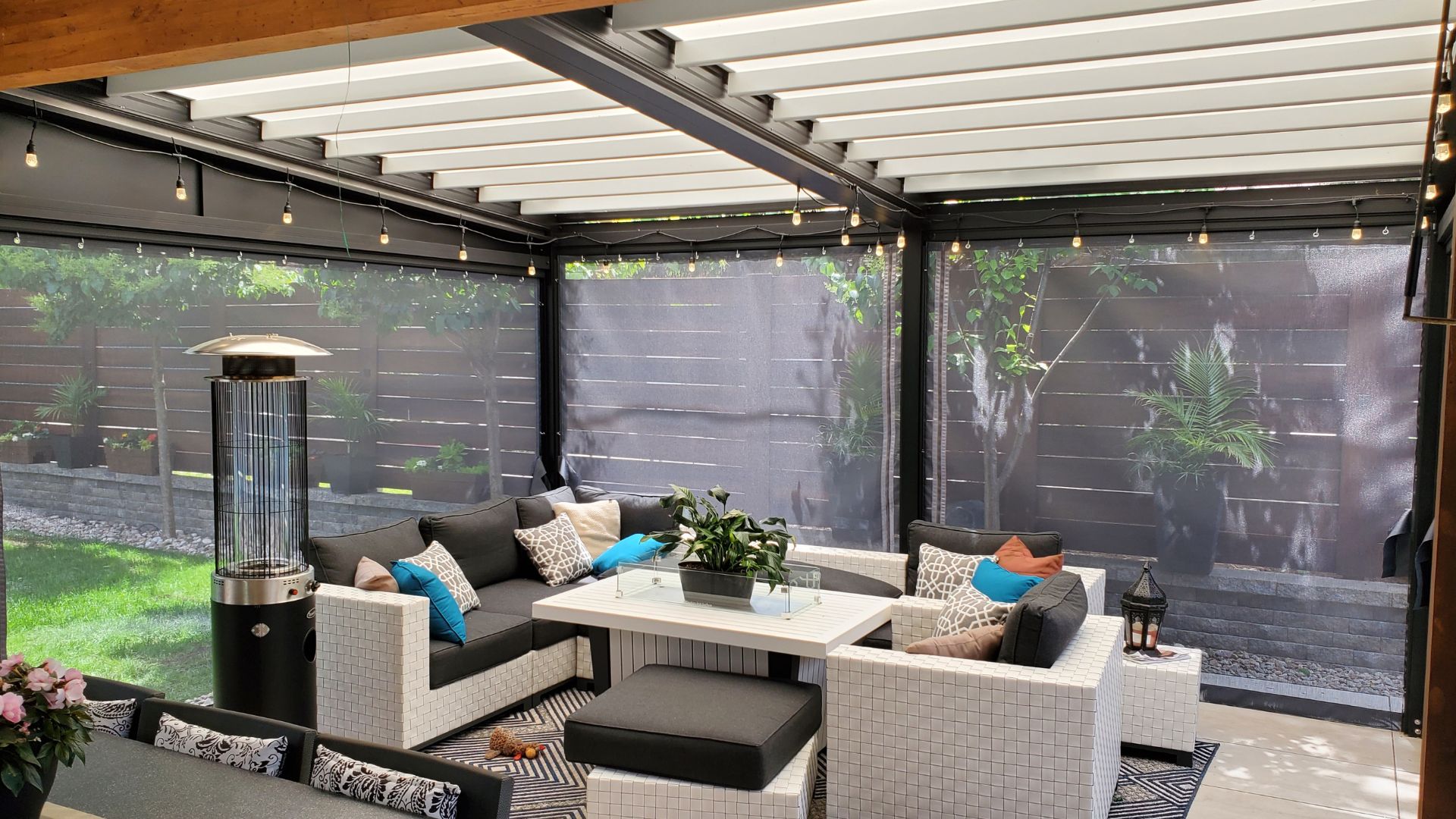
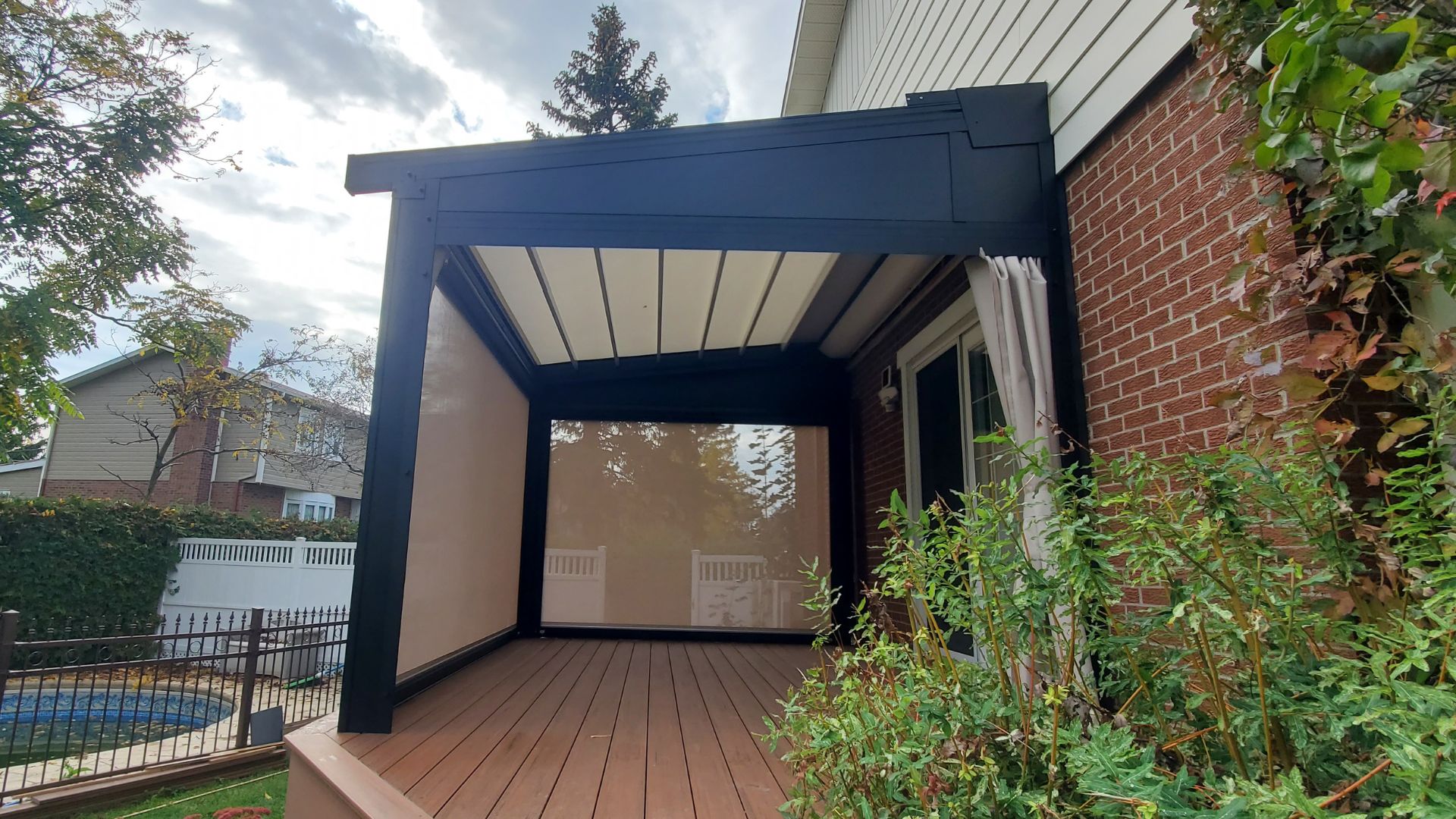
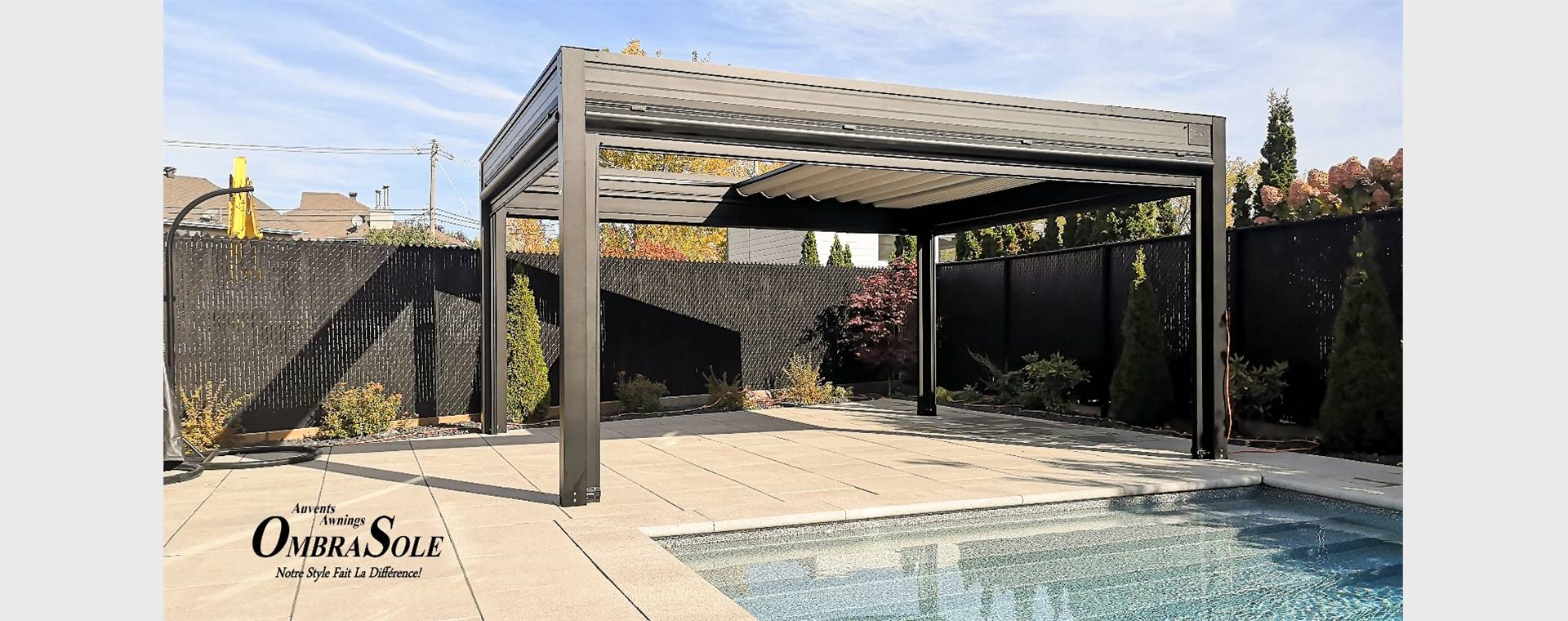
It’s when you read about these psychological principles that you understand why Vivace, the pergola with a motorized retractable roof, so naturally creates that sense of space you never want to leave. Its self-supporting extruded aluminum structure, with its four posts and elegant, immediately creates a visual boundary that tells your brain: This is your space. You’re not on a stage exposed to the world, you’re in your own little corner, in your sanctuary.

Its retractable roof, made of high-quality Serge Ferrari vinyl fabric, offers superior protection that can be adjusted as needed. When the fabric is extended, it creates a sense of psychological refuge that promotes relaxation and a sense of letting go. And when it’s retracted, it offers an unobstructed view of the sky, maintaining the connection to nature, natural light, and fresh air that are essential to outdoor well-being. It is this precise and intuitive balance between openness and protection that
Light control, on the other hand, is managed by the fabric itself: It filters light when extended and is completely absent when retracted. You choose the quality of light that matches the atmosphere you want to create, soft and subdued for a relaxing evening, bright and direct for a sunny morning. And with LED lighting and vertical retractable screens, available in motorized or manual versions, you can extend the thermal comfort of your space well beyond the hot days of July, all the way through the cool evenings of September and October, maintaining that ideal comfort zone that makes you want to stay.
Designing for Well-Being: An Investment in Your Quality of Life
Understanding the psychology of outdoor spaces fundamentally changes the way we think about patio design. We no longer simply seek to create a beautiful space, we seek to create a space that promotes well-being, encourages relaxation, and makes us want to stay. And this understanding shifts our investment priorities: Structure comes before furniture, boundaries before decoration, and thermal comfort before aesthetics.
A well-designed outdoor space is one that people use more often, for longer periods, and with greater enjoyment, making it one of the most worthwhile investments in terms of daily quality of life. Every extra hour spent outdoors in a comfortable, well-defined space is an hour of relaxation, connection with nature, and well-being that your home offers you for free, once the initial investment has been made.
Your patio can become the place where you spend time without even thinking about it
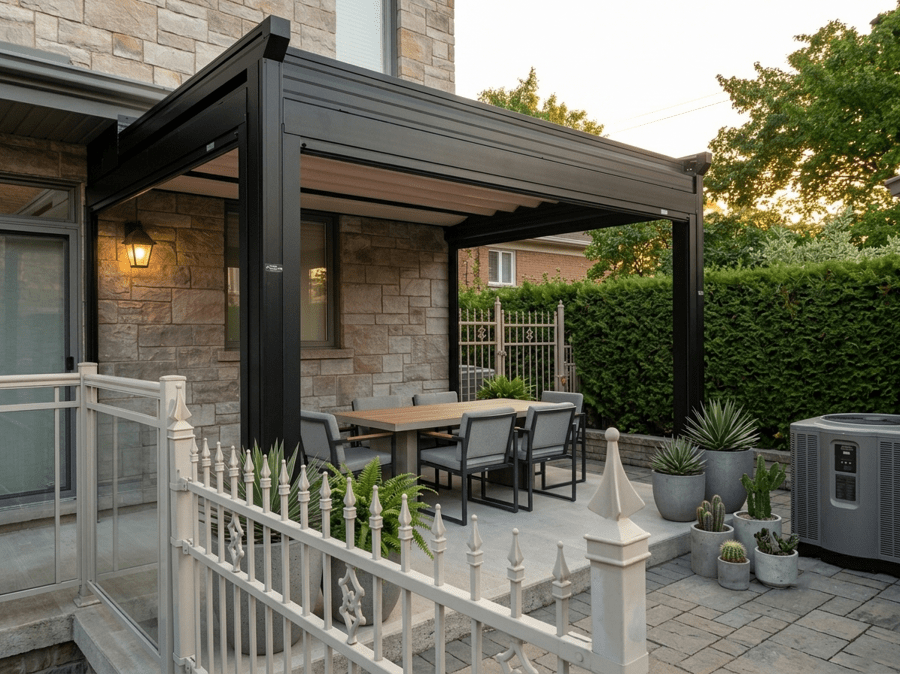
Outdoor spaces that effortlessly draw us in are no accident, they are the result of a design that addresses fundamental psychological needs for boundaries, protection, light control, and thermal comfort. And here’s the good news: These principles are accessible to any homeowner who chooses to incorporate them into the design of their outdoor space.
Ombrasole’s Vivace motorized pergola with a retractable roof is designed to combine all these features into an elegant, durable structure made in Quebec. It is designed to combine all these elements into an elegant, durable structure made in Quebec.
MOST RECENT
Read our latest articles
All you need to know about custom made awnings, outdoor canopies maintenance, decoration and more.