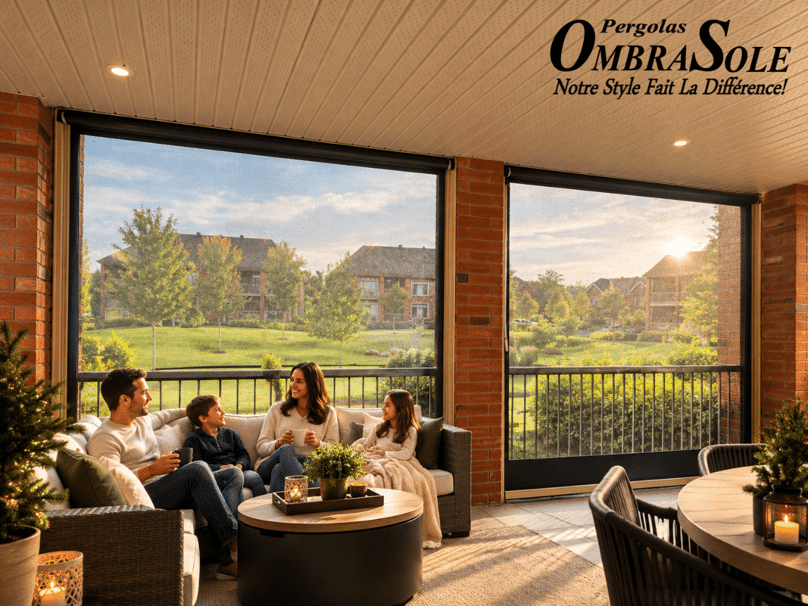
Every spring, dozens of restaurants, cafés, and retail business owners in Montreal make the same mistake: they buy outdoor curtains or screens without really knowing what they’re looking for, often basing their decision mainly on price or how the product looks in the store. And every fall, some of those same owners end up with warped screens, jammed mechanisms, faded fabric, or worse, a system that has failed in the middle of service, right in front of customers. Buying a commercial exterior curtain is no small matter. Its equipment that will be handled daily, exposed to the elements all season long, and must withstand heavy duty use far beyond what’s expected of a residential product. This guide is here to help you make the right choice.
A commercial garage door is different from a residential one, and that makes all the difference
Le premier point à comprendre, c’est que les exigences d’un contexte commercial sont fondamentalement différentes de celles d’un usage résidentiel. À la maison, un store est ouvert et fermé quelques fois par semaine, par la même personne, dans des conditions relativement contrôlées. Dans un restaurant ou un café, ce même store sera manipulé plusieurs fois par jour, par différents membres du personnel, souvent rapidement entre deux services. Il sera exposé au vent pendant des heures de suite, à la pluie, à la chaleur intense de l’été montréalais, et ces sept jours sur sept pendant cinq à six mois par année.
A product that lasts five years in residential use may fail after just two seasons in a high-traffic commercial setting. That is why the selection criteria must be fundamentally different, and why large-format solutions, designed for moderate residential use, are generally unsuitable for commercial establishments.
Criterion #1: Wind resistance, the most underestimated factor
Wind is the number one enemy of commercial outdoor screens and curtains. And yet, it’s the factor most often overlooked when making a purchase. We test the mechanism in the store, look at the available colors, and check the dimensions, but we rarely ask how the product performs in high winds.
A screen that billows, flaps, and opens in moderate winds is not only ineffective, but also potentially dangerous to customers sitting nearby, and it gives your establishment a terrible image. Zipper systems in the side guides, which are very common on entry-level products, tend to get stuck, wear out quickly, and create exactly the kind of billowing problem you want to avoid. What to look for: A locking mechanism that keeps the fabric taut even in strong winds, with no visible zippers in the side guides. This design physically prevents the fabric from billowing or opening, regardless of wind speed, and allows staff to easily reposition the fabric in the rails if necessary.

Critère #2 : La qualité de la toile : Ce qui se voit et ce qui dure
The fabric is the most visible part of your screen, and the part that deteriorates the fastest if the material isn’t up to par. In a commercial setting, your screen serves as a marketing tool: it reflects your business’s image, is seen by hundreds of people every day, and must remain in good condition season after season without needing to be replaced prematurely.
Inexpensive screens fade quickly when exposed to UV rays, lose their structure and shape, and can develop mold if they don’t dry properly. In a commercial setting where customers regularly take photos of your patio and share them on social media, a faded and warped canopy can directly harm your brand image.
What to look for: A fabric from a brand recognized in the technical textiles industry, with a substantial warranty against fading. Serge Ferrari is the global leader in this field; its fabrics are used in the most demanding environments, from stadiums to luxury hotels, and offer superior performance in terms of resistance to UV rays, moisture, and mechanical wear.
Criterion #3: Motorization: An investment that pays for itself in operational convenience
In a residential setting, a manual roller shade may be perfectly suitable. In a commercial setting, motorization is not a luxury, it’s an operational necessity. Your staff must be able to open and close the shades quickly and efficiently, without interrupting service and without requiring special training. A shade that takes several minutes to operate or requires significant physical effort is a shade that will be neglected and therefore left unused.
Engine reliability is also critical in a commercial setting. A motor that breaks down in the middle of the summer season means interrupted service, an unusable patio, and potentially unhappy customers. What to look for: a motor from a recognized brand, with a substantial warranty and available after-sales service. Somfy is the global leader in motorization for outdoor screens and curtains, reliable and durable.
Criterion #4: Customization and warranties: What protects your investment
Commercial screens should fit your space perfectly, not the other way around. Off-the-shelf products often leave areas uncovered, create installation issues, and fail to blend seamlessly with your establishment’s architecture. Custom-made solutions are the only way to ensure perfect fit, optimal coverage, and a visual integration that aligns with your establishment’s brand image.
Warranties, on the other hand, are a measure of a manufacturer’s confidence in its product. A manufacturer that offers a limited warranty on the fabric and several years on the mechanism is one that believes in the durability of its products. Be wary of products without a clear warranty or with very short warranties; this is often a sign of manufacturing quality that is insufficient for intensive commercial use.
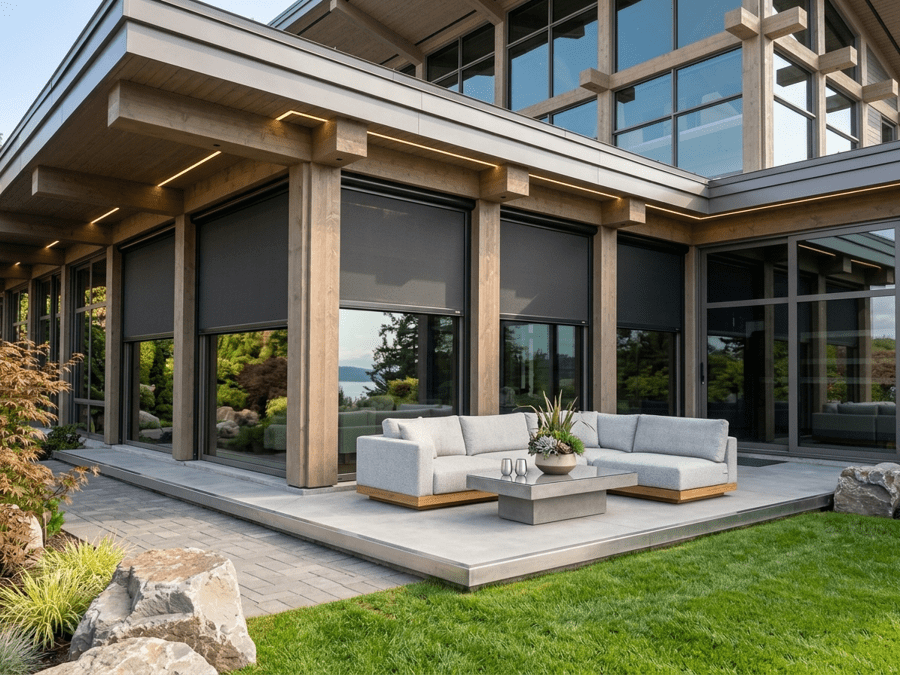
The retractable screen TCL: designed to meet all these criteria
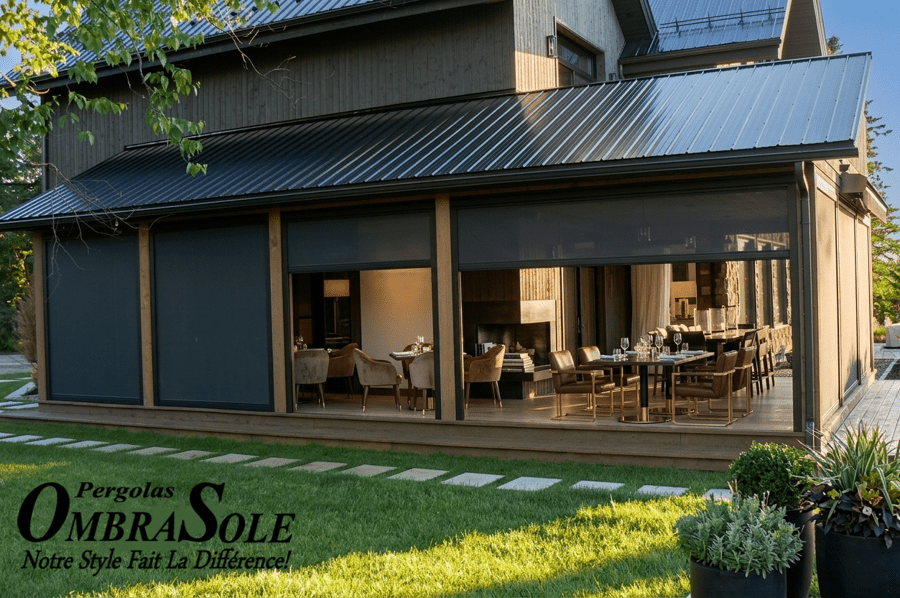
With all these criteria in mind, TCL motorized retractable screen clearly stands out in the commercial outdoor screen market. Designed and manufactured exclusively in Quebec, the retractable screen TCL meets every requirement for heavy-duty commercial use. Its revolutionary wind-resistant locking system, located at the bottom of the store, keeps the fabric perfectly stable even in strong winds, without zippers in the side guides, without flapping, and without billowing. It’s a design that definitively solves the problem of wind.
Serge Ferrari fabric offers superior durability and UV resistance and is available in a range of colors to complement your establishment’s visual identity. The Somfy motorization ensures smooth, effortless operation; your staff can open and close the shade with a simple press of a remote control, in just a few seconds, between service periods, it fits your space perfectly.
Invest wisely once, and don’t do it again in two years
The true cost of a poor purchase isn’t just measured by the price of the product, it’s also measured in terms of service interruptions, damaged brand reputation, premature replacement, and operational frustration. A high-quality commercial screen is an investment that quickly pays for itself in comfort, efficiency, and durability.
Before you buy, ask the right question: How wind-resistant is it? What brand is the fabric, and what warranty is included? Is the motor from a reputable brand? Is it custom-made? If the answers aren’t clear and reassuring, look elsewhere.
MOST RECENT
Read our latest articles
All you need to know about custom made awnings, outdoor canopies maintenance, decoration and more.