Your restaurant is doing well. On Friday and Saturday nights, you must turn people away. Regular customers politely complain about having to make reservations a week in advance. And naturally, an idea begins to take shape: What if we expand? More seats, more table service, more revenue. It’s the logical conclusion of success, except that in most cases, expanding a restaurant is one of the most expensive, time-consuming, and risky decisions an owner can make. And while you’re weighing up this option, which could cost tens of thousands of dollars, there may already be a much simpler, cheaper solution right next to your dining room that could be up and running in a matter of weeks: your patio.
The True Cost of Expanding a Restaurant
Physically expanding a retail space involves more than just knocking down a wall and adding tables. It is a project that typically requires architectural plans, municipal permit applications, zoning assessments, compliance with fire safety and accessibility standards, and often negotiations with the building owner to acquire adjacent space, if such space is even available.
And that’s just the beginning. The construction work itself can take several months during which part or all your establishment may have to close, or at the very least operate under suboptimal conditions with dust, noise, and disruptions for existing customers. Every week of closure or reduced operations represents lost revenue that directly adds to the project’s cost. Not to mention that expansion often permanently increases your leasable area, and thus your rent, regardless of whether the new spaces are used at full capacity or not.
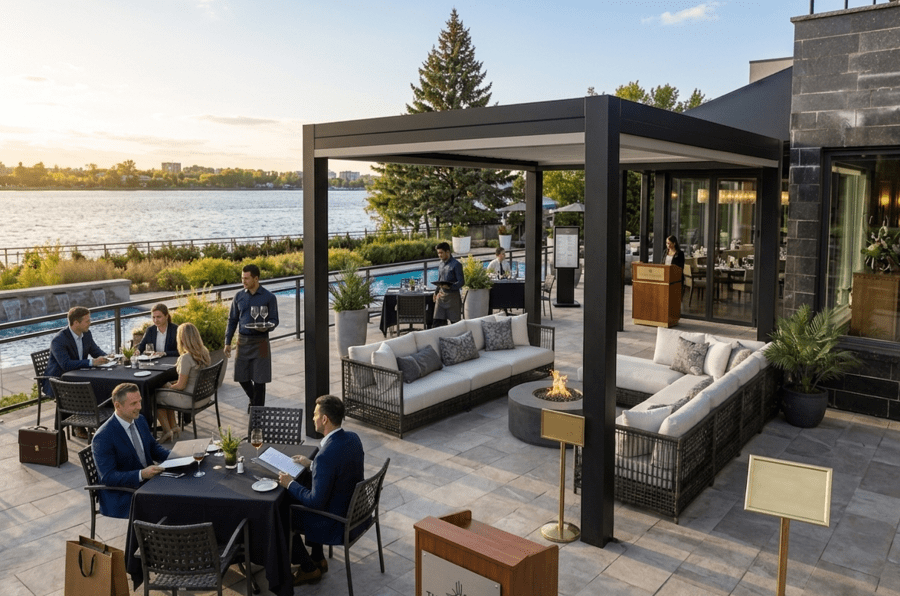
Ultimately, even a modest expansion project can easily cost between $70,000 and $150,000, or more depending on the scope of the work, and that’s before factoring in lost revenue during the closure or disruption.
The space you already have, but only use half of
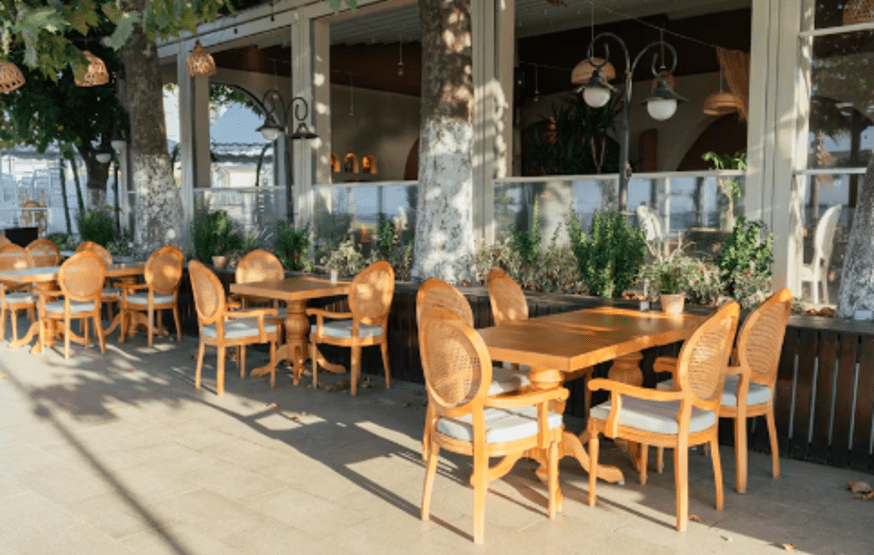
As you consider adding more square footage to your establishment, chances are you already have an outdoor terrace, an attached space that’s usable for a few months a year, which offers significant capacity. The problem is that this capacity is only being utilized at a fraction of its potential: A few weeks in the middle of summer, only when the weather is nice, never in the evening when the mosquitoes come out, never when it rains, and almost
Do the math: If your patio has 20 seats and is only truly full about 30 days a year due to weather conditions, you have the potential to generate revenue from those 20 seats for an additional 120 to 150 days, without building a single wall, without applying for a single zoning permit, and without closing your business for a single day.
A Cost Comparison: Expanding vs. Upgrading
Let’s look at a concrete example. As we’ve seen, expanding by 20 seats requires a minimum investment of tens of thousands of dollars, several months of downtime, operational disruptions, and a permanent increase in your fixed costs. Equipping an existing 20-seat patio with a bioclimatic pergola represents a significantly lower investment, generally a fraction of the cost of a comparable expansion, an installation that takes just a few weeks depending on complexity, without significant service disruption, and without increasing your rent or property taxes.
The result in terms of additional capacity can be very similar, or even greater, since you also gain seasonal flexibility. You can serve customers on this patio from May through October, for lunch and dinner, rain or shine, whereas an indoor expansion does nothing to change your existing outdoor capacity, which remains just as underutilized as before.
Eolo Star: Turn your patio into a true extension of your living space
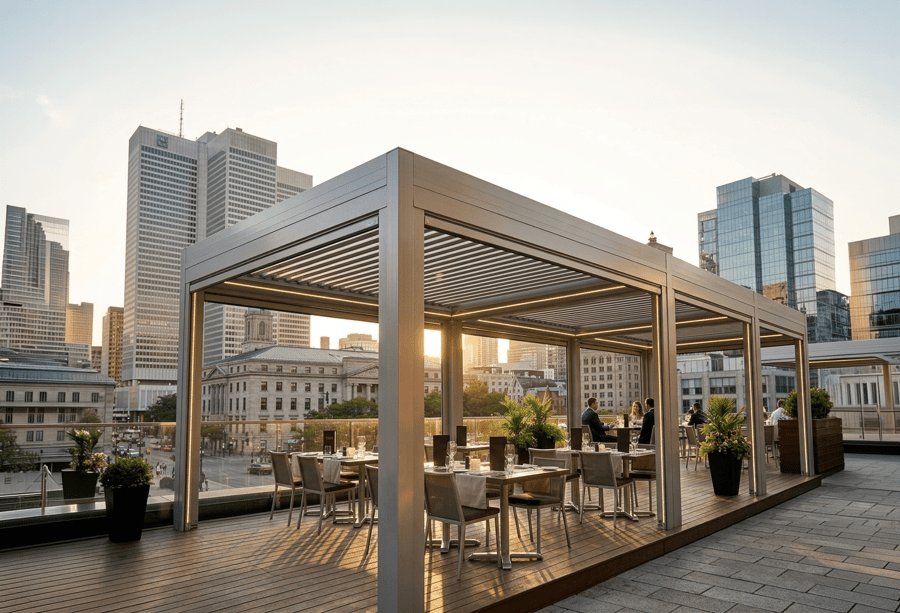
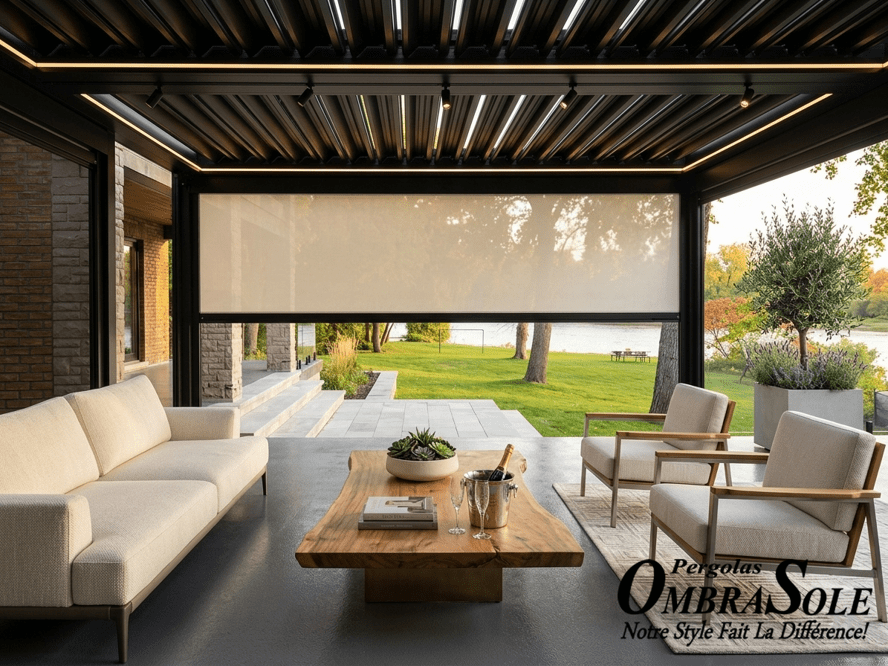
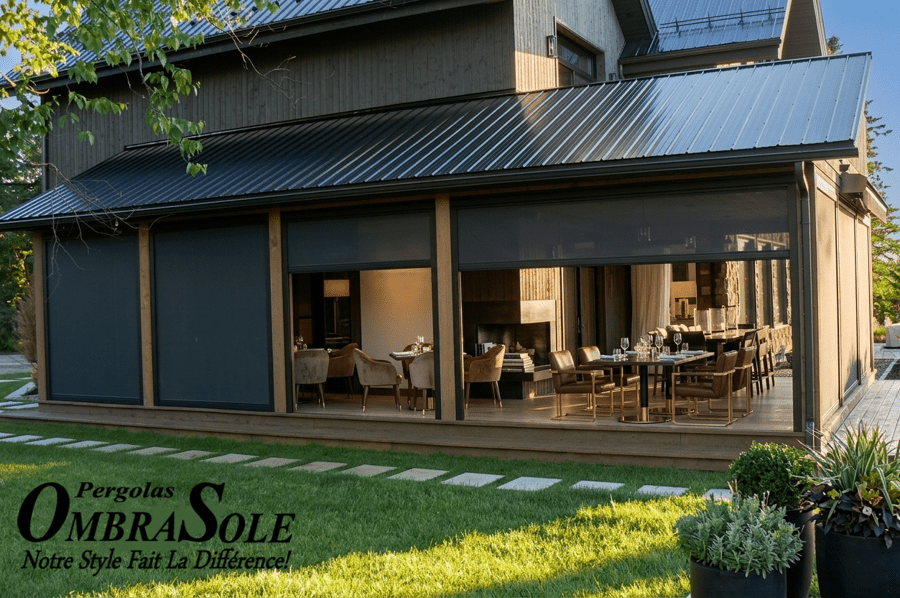
That’s exactly what Eolo Star, the motorized bioclimatic pergola from Ombrasole makes possible. Designed and manufactured in Montreal, the bioclimatic pergola Eolo Star transforms a seasonal, weather-dependent patio into a space that can be used almost year-round. Its motorized, adjustable extruded aluminum louvers can be adjusted up to 160 degrees with a simple remote control, offering complete protection from rain, wind, and intense sun, your service continues, no matter what the weather brings.
The mosquito screen above the louvers, a unique innovation in North America, eliminates the problem of insects in the evening, allowing you to serve customers comfortably well past sunset. And with options for motorized and crank-operated curtains and LED lighting, your patio remains inviting and profitable well into the cool October evenings, potentially adding two full months of usable capacity to your operating calendar.
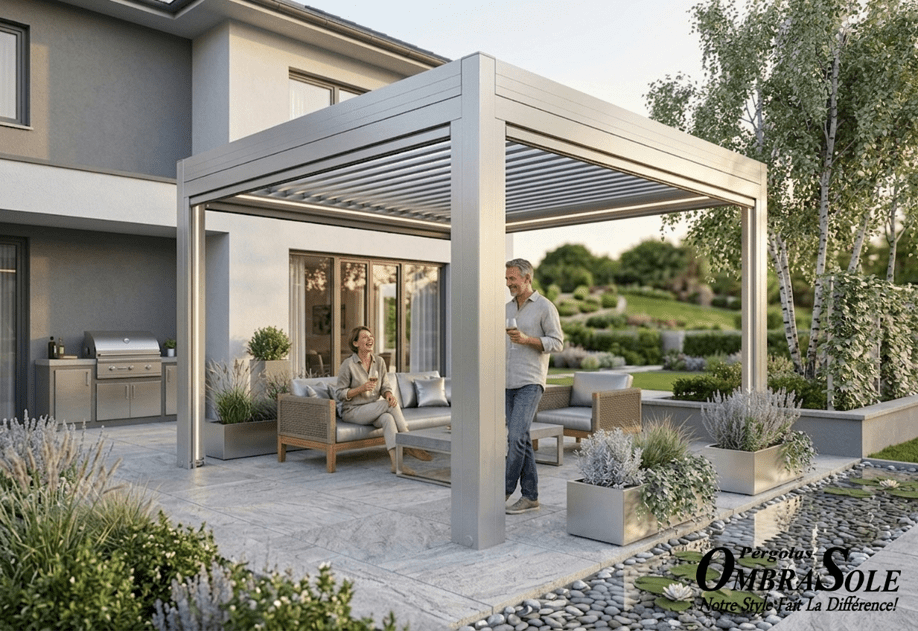
And unlike any addition, installing Eolo Star, the bioclimatic pergola generally does not require major structural changes to your building or complex zoning permits; the freestanding structure, with its four posts, is installed in your existing outdoor space. Fully customizable in colors, dimensions, and finishes to match your establishment’s visual identity, it is also modular to accommodate large areas if your patio allows.
Why does this option go unnoticed by so many homeowners?
If math is so favorable, why do so many homeowners turn to expansion first? Partly because expansion is the most visible, most “obvious” option, we think in terms of square footage, walls, and construction. Optimizing an existing space is less dramatic, less intuitive, and often simply not considered a viable solution.
But homeowners who have done the math, who have compared the cost and time involved in addition to that of upgrading their existing patio, often come to the same conclusion: The most cost-effective, quickest, and least risky option was right there all along, just on the other side of the back door.
Conclusion: Before expanding, look at what you already have
If your establishment is turning away customers and you’re seriously considering expansion, first take the time to look at your patio with fresh eyes. How many seats does it have? How many days a year is it used at full capacity? And how much of that underutilized capacity could be made available quickly, at a lower cost, and without the complications of an expansion, with the right infrastructure?
Eolo Star, the bioclimatic pergola, is the perfect solution. Custom-made in Montreal, it is designed to transform an underutilized outdoor space into a true extension of your hospitality capacity, without the delays, costs, and risks associated with physical expansion.
MOST RECENT
Read our latest articles
All you need to know about custom made awnings, outdoor canopies maintenance, decoration and more.