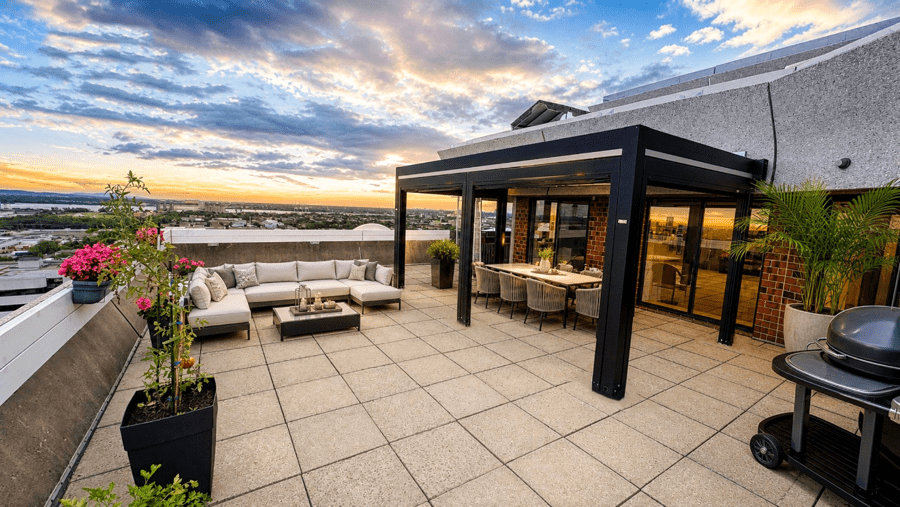
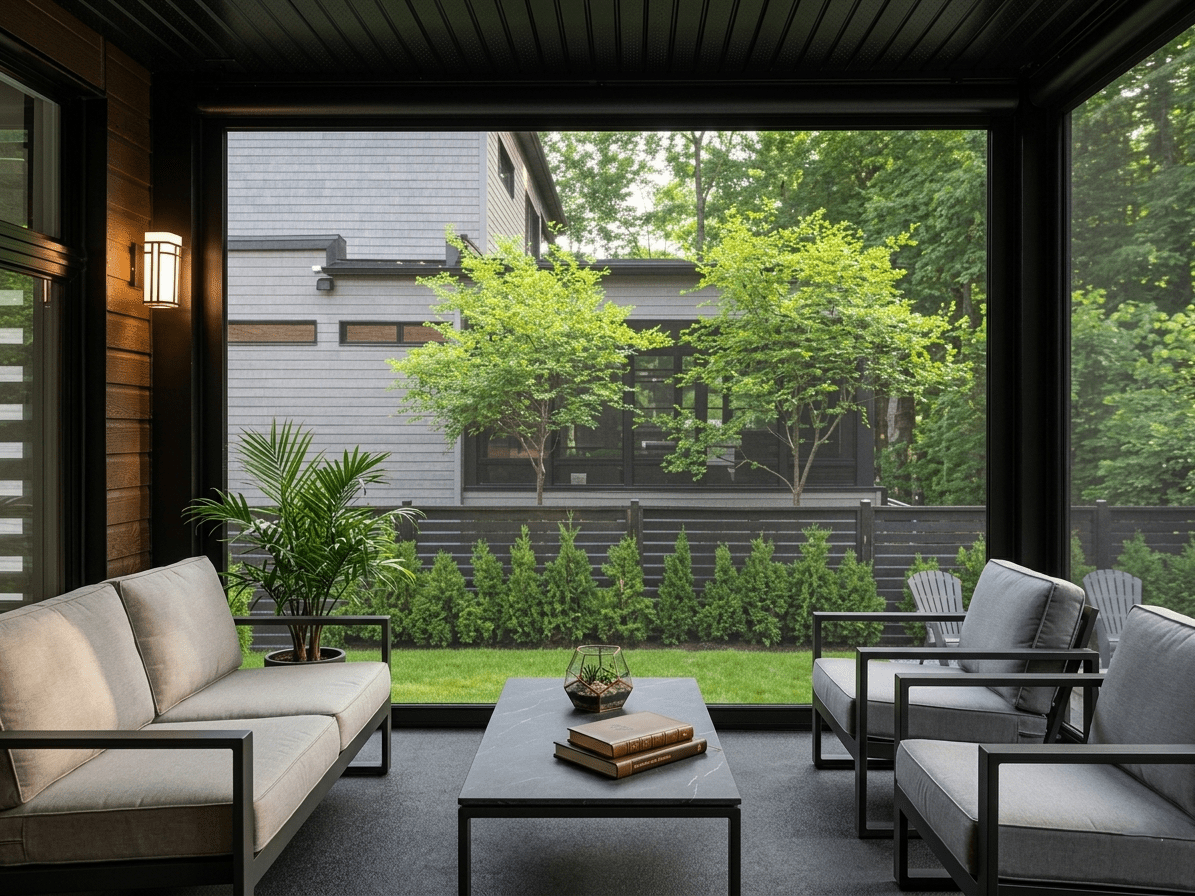
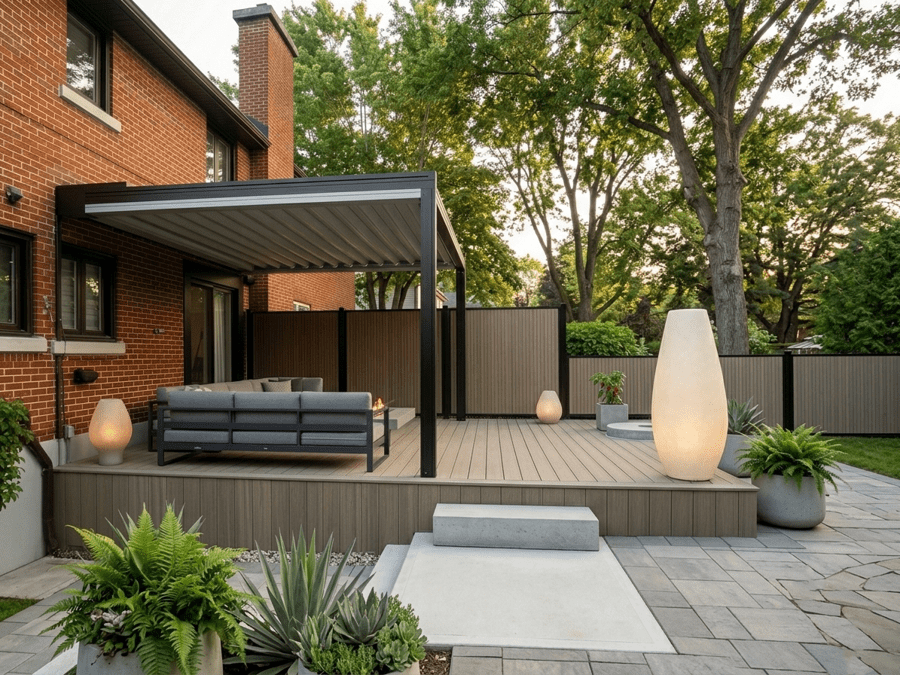
Take a moment to really think about it. Yesterday, how many hours did you spend outside, not in a car, not in an underground parking garage, not in a shopping mall, but truly outside, in the open air, under the sky? If you’re like most Canadians, the honest answer is startling. A study by the U.S. Environmental Protection Agency, one of the most frequently cited on the subject, found that people spend an average of 90% of their lives indoors. Ninety percent. That means for every hour spent outside, we spend nine inside. For someone who lives to be 80, that amounts to 72 full years spent within four walls. The question isn’t whether this figure bothers us, it should bother all of us. The real question is: What are we going to do about it?
Ce que la science dit sur ce que l’intérieur nous coûte
Spending most of our lives indoors is not without consequences, and scientific research over the past few decades has begun to document these consequences with increasing precision. The most immediate one concerns vitamin D: Our primary mechanism for synthesizing this essential vitamin is exposure to direct sunlight. A large portion of the population in Nordic countries, including Quebec, is deficient in vitamin D, with documented effects on the immune system, bone density, mood, and resistance to depression.
In terms of mental health, the effects are just as significant. Studies conducted in several countries consistently show that time spent in natural spaces, even a simple urban park or garden, reduces levels of cortisol, the stress hormone. Exposure to natural light regulates our circadian rhythm, improves sleep quality, and maintains a more stable energy level throughout the day. And simply being outdoors, hearing sounds other than air conditioning and notifications, breathing fresh air rather than recirculated air, activates mental recovery mechanisms that an indoor environment simply cannot replicate.
Not to mention creativity and concentration. Research on work environments shows that employees who have access to outdoor spaces, even just occasionally, exhibit higher levels of creativity and job satisfaction than those who work exclusively indoors. Outdoor space is not a luxury; it is a physiological and psychological need that our modern lifestyle has gradually marginalized.
Why do we spend so little time outdoors?
La réponse facile à ce problème serait de dire qu’on manque de volonté ou de discipline, qu’il suffirait de « décider » de passer plus de temps dehors. Mais cette réponse est insuffisante et un peu injuste. La vérité, c’est que nos espaces extérieurs résidentiels ne sont souvent pas conçus pour nous encourager à y rester. Un balcon exposé au soleil de plein après-midi est inconfortable. Une terrasse sans protection contre la pluie force au repli intérieur à la première averse. Un espace sans intimité crée ce sentiment d’être observé qui décourage la détente. Et un patio sans ombrage efficace est, au Québec entre juin et août, simplement inutilisable plusieurs heures par jour.
Ce n’est pas que les gens ne veulent pas être dehors. C’est que leurs espaces extérieurs ne leur donnent pas les conditions pour y rester. On sort, on teste, on est inconfortable pour une raison ou une autre, et on rentre. Et progressivement, on prend l’habitude de rester à l’intérieur, pas par choix, mais par conditionnement. Le 90% devient auto-réalisateur: On reste à l’intérieur parce qu’on reste à l’intérieur.
The Truly Usable Terrace: The Lever That Changes Habits
Il y a un phénomène bien documenté en psychologie comportementale: Nos habitudes sont moins le résultat de nos intentions que de notre environnement. On mange plus sainement quand les fruits sont à portée de main. On lit plus quand le livre est sur la table plutôt que dans un tiroir. Et on sort plus quand l’espace extérieur est confortable, accueillant et accessible sans friction.
Homeowners who have equipped their patios with proper shade and protection structures all agree: their behavior has changed. Not because they’ve made New Year’s resolutions, but because the space has become pleasant enough that they naturally want to spend time there. Morning coffee is now enjoyed outdoors. Lunch is often eaten outside. Work meetings are held on the patio. Evenings stretch out under the patio lights. These aren’t conscious efforts; they’re behaviors that emerge naturally when the environment makes them easy.
A terrace that can truly be enjoyed in any weather, at any time of day, from spring through fall, can easily double or triple the amount of time you spend outdoors. And this difference, multiplied over weeks, months, and years, has a real and measurable impact on quality of life, mental health, and overall well-being.
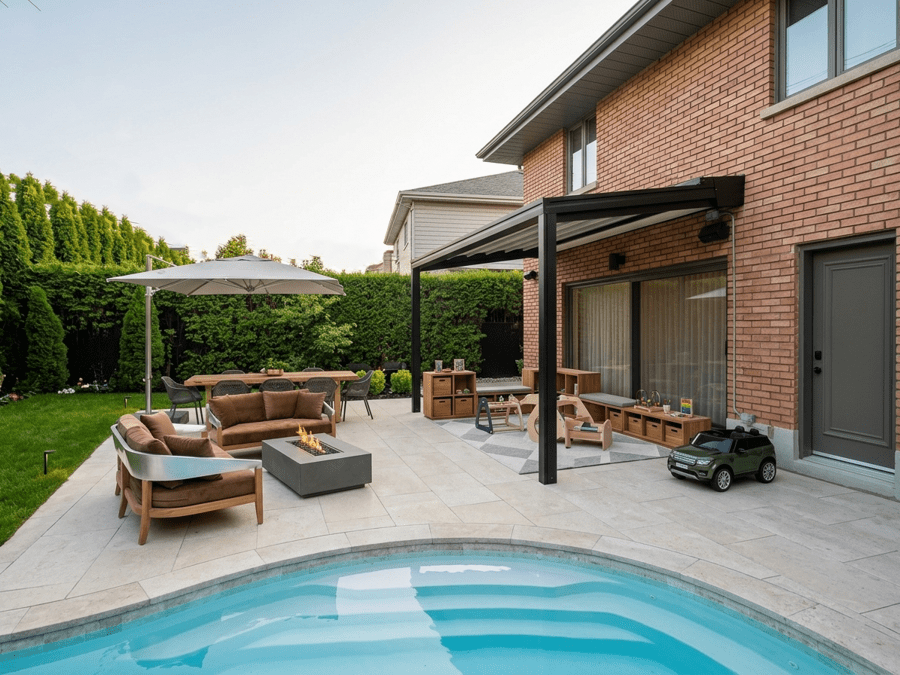
Capriccio: The pergola with a retractable roof that makes change possible
It is in this context, not simply as a convenience, but as an investment in your quality of life and health that Ombrasole’s Capriccio retractable patio Pergola truly comes into its own. Designed and manufactured in Quebec, the retractabb pergola Capriccio transforms an ordinary patio into a functional outdoor living space that can be enjoyed at any time and in all weather conditions. Its modular design allows you to cover exactly the area you need.
Its high-end vinyl canvas, which is 100% waterproof and fire-resistant, keeps you dry during sudden downpours that, without protection, would force you to go inside. Its built-in gutter system silently channels water down the posts. When the sky clears, you retract the roof, and your space opens completely to the sky. Your patio remains usable in the evening and well into the cool October nights, giving you even more opportunities to spend time outdoors.
It’s no coincidence that homeowners who install the Capriccio consistently use their patios much more often than before. It’s not a matter of willpower; it’s a matter of the environment. When the space is comfortable, when the weather is no longer an obstacle, when you can sit outside in the morning with your coffee without wondering if you’ll have to go back inside in twenty minutes, you stay. Naturally, effortlessly, without even thinking about it.

Investing in your patio is investing in your health
We spend 90% of our lives indoors. That figure isn’t going to change by magic, and good intentions aren’t enough to change deeply ingrained habits. What really changes behavior is the environment. And if your outdoor space is designed to be truly usable, comfortable, sheltered, and inviting, you’ll use it. Simply because it’s pleasant. Simply because it’s there.
MOST RECENT
Read our latest articles
All you need to know about custom made awnings, outdoor canopies maintenance, decoration and more.